At a tasting of the Glen Garioch range last night Phil Nickson of Morrison Bowmore Distillers (MBD) treated us to a preview of the latest vintage release, a 1998 distillation matured in ex wine casks, specifically Saint-Julien, a Bordeaux red wine appellation.
We started with the core expressions, the Founder's Reserve and 12 Year Old. These are drams of which I think highly, in part at least because they taste just right at 48%. This is not a common bottling strength, suggesting that it has been chosen for reasons of taste (easier to do if you only shift 19,000 cases a year rather than say 120,000 like Bowmore). Two sweet and spicy drams, good to very good.
Next was the cask strength 1999 Sherry vintage, first released last year. Very much in the bold spicy Glen Garioch style of the first two whiskies, it also showed loads of somewhat rubbery sherry, and a pile of sweet red fruits; tinned strawberries perhaps. The finish was treacly and spicy. Excellent.
Glen Garioch 1991, released in 2010, is an ex bourbon expression, dating from when Glen Garioch malted its own barley with a bit of peat in the mix. A very elegant dram (most Glen Garioch is what I'd call powerful rather than elegant), with smoky honey and coconut notes and a milky waxy finish. Very Good.
And so to the drum roll dram, the new 1998 vintage. I have to declare an interest here. I am a claret fanboy, specifically the Northern Médoc, so I may be a little biased towards this dram. It's worth noting that Saint-Julien is best known for Cabernet Sauvignon, a cask type which is also used in the assemblage for Dalmore King Alexander, a superb whisky, albeit overpriced, and in the cracking Longrow Red from Springbank.
The spice notes I found in other expressions this evening were much rounder and softer in the '98. There was a qualitative difference in the fruit character too, with definite fruit-yoghurt notes, where the other whiskies showed dried fruits and lacked the creamy, buttery note. On the other hand, there is a bit of spirit burn, which the other drams didn't have. The palate is complex, with typical Garioch spice, soft buttery-treacle notes, and a wee touch - hard to pin down - of something savoury. Most decidedly excellent.
The one caveat I have regards the price. This release, 15 years old, bottled at 48%, costs about £100. The 1991, at cask strength and 19 years old, can be had for £70. It seems to me that MBD are cashing in on the current whisky bubble.
Or perhaps I just didn't like the whisky enough. Certainly, after the tasting, three people thought it was good enough to pre-order and pay for.
By way of a bonus, Phil then treated us to a wee taster of two other expressions, the Virgin Oak and the 1986. The Virgin Oak is delicious, although it perhaps ought to be called Bourbsky or Whisbon, since white oak is such a dominant flavour (irrelevant aside: naturalists say that a typical oak tree is home to some three hundred species of other plants and animals. Is it unreasonable to call humans the three hundred and first, since the flavour of oak is so important in so many human beverages??).
The 1986 was a fine, fine drop, and made all the finer by the subtle thread of smoke running through it. Since closing their floor maltings in 1994, Glen Garioch has been made with unpeated barley. On the basis of the '86, I would call that a big fat mistake.
Showing posts with label Highland. Show all posts
Showing posts with label Highland. Show all posts
2014-06-05


2014-04-19
Glenglassaugh Torfa
Newly arrived this week is a no-age-statement peated whisky from Glenglassaugh distillery, Torfa (which means turf in Old Norse. I spent an entertaining twenty minutes trying to look this up. The closest I could get was torf).

Glenglassaugh, since the change of ownership in 2008 have been pursuing a strategy of releasing very old and very young whiskies - a necessity after twenty two years silent. There were a series of three new make spirit drinks, alongside such beautifully aged drams as the 26 Year Old and the 30 Year Old. The current core dram is the Evolution, which was initially released at cask strength but is now bottled at 50%.
Torfa is, like the Evolution, bottled at 50%. It's a pale whisky. The nose is fairly intense and has lots of dry smoke, with lighter notes of heather and iodine or salt. I also found a suggestion of honey.
The palate is soft and slightly oily, with honey and plenty of dry smoke, shading into a metallic warm aroma (like heating a cast iron pan with nothing in it). The palate doesn't have any of the iodic notes from the nose, which is a definite difference from Islay style peated whiskies.
With water this is a very easy drinking dram, nicely smoky, although perhaps a little simple in the finish. Best to drink it at full strength I think.
Overall I'd say this is a pretty decent whisky from Glenglassaugh. Onwards & upwards!
Glenglassaugh, since the change of ownership in 2008 have been pursuing a strategy of releasing very old and very young whiskies - a necessity after twenty two years silent. There were a series of three new make spirit drinks, alongside such beautifully aged drams as the 26 Year Old and the 30 Year Old. The current core dram is the Evolution, which was initially released at cask strength but is now bottled at 50%.
Torfa is, like the Evolution, bottled at 50%. It's a pale whisky. The nose is fairly intense and has lots of dry smoke, with lighter notes of heather and iodine or salt. I also found a suggestion of honey.
The palate is soft and slightly oily, with honey and plenty of dry smoke, shading into a metallic warm aroma (like heating a cast iron pan with nothing in it). The palate doesn't have any of the iodic notes from the nose, which is a definite difference from Islay style peated whiskies.
With water this is a very easy drinking dram, nicely smoky, although perhaps a little simple in the finish. Best to drink it at full strength I think.
Overall I'd say this is a pretty decent whisky from Glenglassaugh. Onwards & upwards!
2014-03-27
#LightOnDark
Ah, product launches, how we love you. The elaborate set dressing, the canapés, the free booze, the goodie bag, the celebrity presenter, the hash tag...
To the Arches for the release of AnCnoc's peated whiskies, Rutter, Flaughter, and Tushkar. Even before I entered the launch space I could smell the smoke. Dimly and dramatically lit, it was hardly the best environment to taste anything for the first time (especially from the big mouthed tumblers the whiskies were served in), so I bravely resolved to stuff my face with nibbles, drink whisky, and network.
AnCnoc is a sweet, light dram. It calls itself Highland, although if you ask me it's a fine example of the Speyside style. There are peated Speysiders to be found, but not many of them. AnCnoc have chosen to go for a light smoking, with the added twist that the peatiness is defined according to the level in the new make spirit, rather than, as everyone else does, by reference to the barley. Clever marketing, or merely thrawn?
I tried the Rutter with a tiny blue cheese topped biscuit served from a smoke filled glass dome. It was
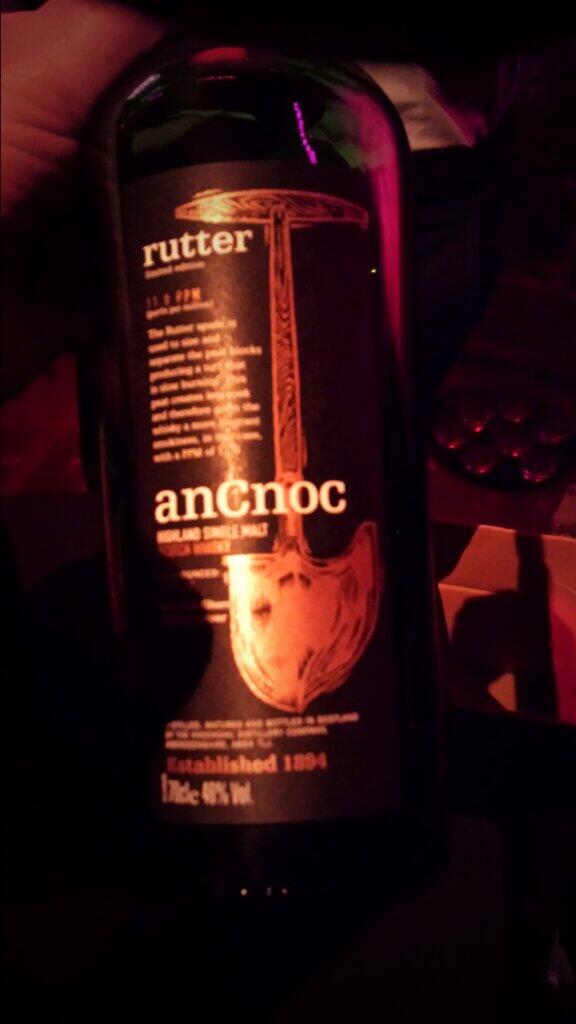 delicious. I've no idea what fraction of the deliciousness was whisky-based, but delicious it was.
The Flaughter didn't seem to go so well with some chestnut cream filled macarons, but on the other hand the mini edible peat bogs complemented it superbly. I ate at least five.
The Tushkar? Well, it's a bit thicker or oilier than the other two, I think. And somewhat smoky.
I left, clutching my loot, having failed to network, and reflecting on the whiskies. I like the Rutter best, because it retains most AnCnoc character, combining sweet barley notes with light, dry smoke. The other two are good, but they could be from any number of distilleries.
My ratings:
To the Arches for the release of AnCnoc's peated whiskies, Rutter, Flaughter, and Tushkar. Even before I entered the launch space I could smell the smoke. Dimly and dramatically lit, it was hardly the best environment to taste anything for the first time (especially from the big mouthed tumblers the whiskies were served in), so I bravely resolved to stuff my face with nibbles, drink whisky, and network.
AnCnoc is a sweet, light dram. It calls itself Highland, although if you ask me it's a fine example of the Speyside style. There are peated Speysiders to be found, but not many of them. AnCnoc have chosen to go for a light smoking, with the added twist that the peatiness is defined according to the level in the new make spirit, rather than, as everyone else does, by reference to the barley. Clever marketing, or merely thrawn?
I tried the Rutter with a tiny blue cheese topped biscuit served from a smoke filled glass dome. It was
The Flaughter didn't seem to go so well with some chestnut cream filled macarons, but on the other hand the mini edible peat bogs complemented it superbly. I ate at least five.
The Tushkar? Well, it's a bit thicker or oilier than the other two, I think. And somewhat smoky.
I left, clutching my loot, having failed to network, and reflecting on the whiskies. I like the Rutter best, because it retains most AnCnoc character, combining sweet barley notes with light, dry smoke. The other two are good, but they could be from any number of distilleries.
My ratings:
- Rutter - Very Good
- Flaughter - Good
- Tushkar - Good
- #LightOnDark - Excellent
- Edible Mini Peat Bogs - Can I Have A Full Size One Please?
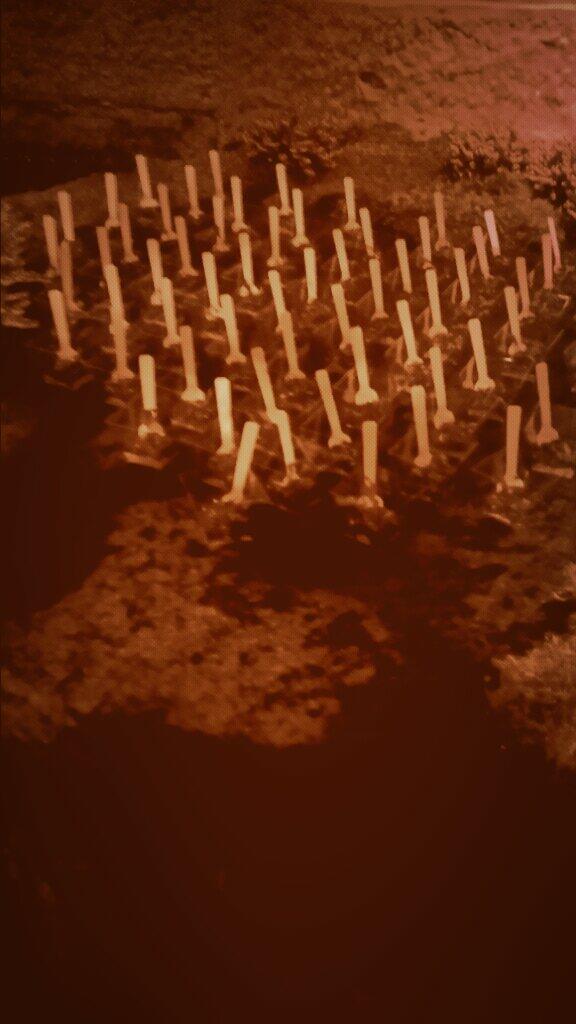
Mmmmm, edible peat bogs
2011-09-13
Lochside 1965
The star of an excellent tasting by Adelphi for Glasgow's Whisky Club was this rare, unusual, old single blend (that's right, single blend) from the long closed Lochside distillery.
Lochside, which operated at Montrose between 1957 and 1992, is one of a small number of distilleries to have produced both malt and grain whisky. But it's rare indeed for the two to be blended together before being put into cask.
 46 years is a very long time for a spirit to spend in cask, and it does result in aromas and flavours which younger whiskies never exhibit. Indeed even the appearance is unusual - it's as dark and viscous as a Pedro Ximinez sherry.
The nose is frankly amazing. Super sweet, but also savoury like a marinade for something about to be grilled, there is a complex array of notes from coconut to chocolate to malt to floor polish to violets. It changes too, sometimes showing the grain character, and seeming very rum-like, as old grain whiskies do. At other times it seems much maltier, with the classic christmas cake nose of a rich old Highland dram.
The palate does not disappoint. Treacle, chocolate, coconut, burnt toasty malt, creamy coffee, burnt toffee, dried vine fruits, this is a real meditation dram, but it's also very moreish. Those sweet flavours are so attractive, yet so well balanced by the bitter notes, I could drink this all night (whilst stopping occasionally to wonder at that rare violet note - something I almost never find in whisky).
A truly excellent dram, but sadly rather out of my price range at around £225. Not to worry: once tasted, never forgotten!
Lochside, which operated at Montrose between 1957 and 1992, is one of a small number of distilleries to have produced both malt and grain whisky. But it's rare indeed for the two to be blended together before being put into cask.
46 years is a very long time for a spirit to spend in cask, and it does result in aromas and flavours which younger whiskies never exhibit. Indeed even the appearance is unusual - it's as dark and viscous as a Pedro Ximinez sherry.The nose is frankly amazing. Super sweet, but also savoury like a marinade for something about to be grilled, there is a complex array of notes from coconut to chocolate to malt to floor polish to violets. It changes too, sometimes showing the grain character, and seeming very rum-like, as old grain whiskies do. At other times it seems much maltier, with the classic christmas cake nose of a rich old Highland dram.
The palate does not disappoint. Treacle, chocolate, coconut, burnt toasty malt, creamy coffee, burnt toffee, dried vine fruits, this is a real meditation dram, but it's also very moreish. Those sweet flavours are so attractive, yet so well balanced by the bitter notes, I could drink this all night (whilst stopping occasionally to wonder at that rare violet note - something I almost never find in whisky).
A truly excellent dram, but sadly rather out of my price range at around £225. Not to worry: once tasted, never forgotten!
2011-05-07
Whisky for Grappa Drinkers
I'm sitting here enjoying three "whiskies" (lawyer-types: I know, I know, "new make spirit") from the recently re-opened Glenglassaugh distillery, which between them can't even scrape up a single year of ageing. As a grappa fan, I couldn't be happier. They all have that solventy, estery fruity nose found in fresh distillates - lovely.
The Clearac is a straightforwardly fresh, plain spirit . It definitely smells of barley, but I also found marmite and toffee pennies. It's a bit rougher than the other two. The palate is oily, sweet, a little malty, peppery, and mineralic (the sea, ozone, ammonia). The metallic finish lets it down, but still, I'd rate it Good.
Blushes is the old lady of the bunch, with a whole six months in ex- red wine casks, which we are told come from California (as if you could tell otherwise from tasting). It is a beautiful pink gold colour, what Aunty would call rose gold, and smells very youthful still, with the same salty and ammonaical notes found in the palate of the Clairac. On top of that there's a pippy, stalky, vinous element - tannin, I should think. Left in the glass for a while it evolves some very attractive red fruit notes, plus the classic grappa nose of honeycomb nougat. It tastes interestingly earthy or musty, and I found a floral note too. Complex and interesting.
And so to the Peated clearac. I don't know what the Parts Per Million of Peat is for this, but they haven't stinted. And it's a fantastic interesting smokiness - dry, charred wood. If you could have smoked grappa - which would be a good thing - you would want it to smell like this. It tastes sweet, oily, and very smoky, with more of that charred wood in the finish. Very good.
Newly opened malt whisky distilleries are always confronted with a huge cash flow problem, and have come up with various wangles to get round this. Glenglassaugh's approach is very interesting, and in the case of the 'Blushes', a definite winner. There is plenty of flavour and complexity in it, even for folk who don't usually enjoy young spirits.
The Clearac is a straightforwardly fresh, plain spirit . It definitely smells of barley, but I also found marmite and toffee pennies. It's a bit rougher than the other two. The palate is oily, sweet, a little malty, peppery, and mineralic (the sea, ozone, ammonia). The metallic finish lets it down, but still, I'd rate it Good.
Blushes is the old lady of the bunch, with a whole six months in ex- red wine casks, which we are told come from California (as if you could tell otherwise from tasting). It is a beautiful pink gold colour, what Aunty would call rose gold, and smells very youthful still, with the same salty and ammonaical notes found in the palate of the Clairac. On top of that there's a pippy, stalky, vinous element - tannin, I should think. Left in the glass for a while it evolves some very attractive red fruit notes, plus the classic grappa nose of honeycomb nougat. It tastes interestingly earthy or musty, and I found a floral note too. Complex and interesting.
And so to the Peated clearac. I don't know what the Parts Per Million of Peat is for this, but they haven't stinted. And it's a fantastic interesting smokiness - dry, charred wood. If you could have smoked grappa - which would be a good thing - you would want it to smell like this. It tastes sweet, oily, and very smoky, with more of that charred wood in the finish. Very good.
Newly opened malt whisky distilleries are always confronted with a huge cash flow problem, and have come up with various wangles to get round this. Glenglassaugh's approach is very interesting, and in the case of the 'Blushes', a definite winner. There is plenty of flavour and complexity in it, even for folk who don't usually enjoy young spirits.
2010-08-29
Aberlour a Go-go
Another entertaining tasting at the Bothy, this time, a Sunday afternoon whisky school, with some very interesting food matching going on.
Dalwhinnie 15yo was rather excellent tasted with honeycomb nougat. Ardbeg 10yo went surprisingly well with a mildish remoulade; the horseradish wasn't overly fiery, and the creamy dressing pulled everything together nicely. But the culinary star of the day was Aberlour A'Bunadh batch 31.
A'Bunadh is a true sherry monster, in the best way possible. This batch seems particularly wine-y and fresh - it reminds you that sherry is a wine, and sometimes a rather fruity one. But more than that, and always, A'Bunadh tastes of cherries; sweet red cherries, not the black ones.
So served with a big fat cherry that had been dipped in dark chocolate, the Aberlour was very heaven (very heaven = 5).
Dalwhinnie 15yo was rather excellent tasted with honeycomb nougat. Ardbeg 10yo went surprisingly well with a mildish remoulade; the horseradish wasn't overly fiery, and the creamy dressing pulled everything together nicely. But the culinary star of the day was Aberlour A'Bunadh batch 31.
A'Bunadh is a true sherry monster, in the best way possible. This batch seems particularly wine-y and fresh - it reminds you that sherry is a wine, and sometimes a rather fruity one. But more than that, and always, A'Bunadh tastes of cherries; sweet red cherries, not the black ones.
So served with a big fat cherry that had been dipped in dark chocolate, the Aberlour was very heaven (very heaven = 5).
2010-05-07
Off to Alloa...
...for a charity fundraising whisky tasting. The six whiskies were all donated, so there was no theme, but some interesting contrasts arose anyway.
Tullibardine was mothballed in 1995 and did not produce whisky again until 2003, when they became independent. They have approached the problem of this gap in production (which leaves them unable to offer a ten year old whisky until 2013) and made a virtue of necessity by presenting the whisky as a Bourbon Cask Edition, which is rather like Hovis offering their bread as the Yeasted Edition. It's a light easy whisky which reminded me of Auchentoshan 10yo, being spirity and sweetly floral. Good, 3+.
Tormore 12yo and Dufftown 12yo (sorry Diageo, Singleton of Dufftown) were both very easy Speysides in the toffee-ish mode, although I did see an interesting herbaceous aftertaste in the Tormore. Bunnahabhain 12yo was also an easy malt, and tonight it seemed maltier than usual for an Islay whisky.
Lagavulin 16yo and Laphroaig Quarter Cask were a fine pairing. The Lagavulin (the oldest standard release of any malt?) is all smoke and brine and intense oily saltiness, but the Quarter Cask has reined in the usual Laphroaig TCP aroma somewhat, perhaps allowing the whisky to appeal to a wider audience. The texture, too, is easier -smoother- than the ten year old. Both these whiskies I rated as excellent, 4 to 4+.
The best description of the night, about the Lagavulin, was, "like a mixture of amyl nitrate, ether and methylated spirits", from a chap who claims that he fuels model airplanes with such a mixture.
Tullibardine was mothballed in 1995 and did not produce whisky again until 2003, when they became independent. They have approached the problem of this gap in production (which leaves them unable to offer a ten year old whisky until 2013) and made a virtue of necessity by presenting the whisky as a Bourbon Cask Edition, which is rather like Hovis offering their bread as the Yeasted Edition. It's a light easy whisky which reminded me of Auchentoshan 10yo, being spirity and sweetly floral. Good, 3+.
Tormore 12yo and Dufftown 12yo (sorry Diageo, Singleton of Dufftown) were both very easy Speysides in the toffee-ish mode, although I did see an interesting herbaceous aftertaste in the Tormore. Bunnahabhain 12yo was also an easy malt, and tonight it seemed maltier than usual for an Islay whisky.
Lagavulin 16yo and Laphroaig Quarter Cask were a fine pairing. The Lagavulin (the oldest standard release of any malt?) is all smoke and brine and intense oily saltiness, but the Quarter Cask has reined in the usual Laphroaig TCP aroma somewhat, perhaps allowing the whisky to appeal to a wider audience. The texture, too, is easier -smoother- than the ten year old. Both these whiskies I rated as excellent, 4 to 4+.
The best description of the night, about the Lagavulin, was, "like a mixture of amyl nitrate, ether and methylated spirits", from a chap who claims that he fuels model airplanes with such a mixture.
Subscribe to:
Posts (Atom)