Ah, product launches, how we love you. The elaborate set dressing, the canapés, the free booze, the goodie bag, the celebrity presenter, the hash tag...
To the Arches for the release of AnCnoc's peated whiskies, Rutter, Flaughter, and Tushkar. Even before I entered the launch space I could smell the smoke. Dimly and dramatically lit, it was hardly the best environment to taste anything for the first time (especially from the big mouthed tumblers the whiskies were served in), so I bravely resolved to stuff my face with nibbles, drink whisky, and network.
AnCnoc is a sweet, light dram. It calls itself Highland, although if you ask me it's a fine example of the Speyside style. There are peated Speysiders to be found, but not many of them. AnCnoc have chosen to go for a light smoking, with the added twist that the peatiness is defined according to the level in the new make spirit, rather than, as everyone else does, by reference to the barley. Clever marketing, or merely thrawn?
I tried the Rutter with a tiny blue cheese topped biscuit served from a smoke filled glass dome. It was
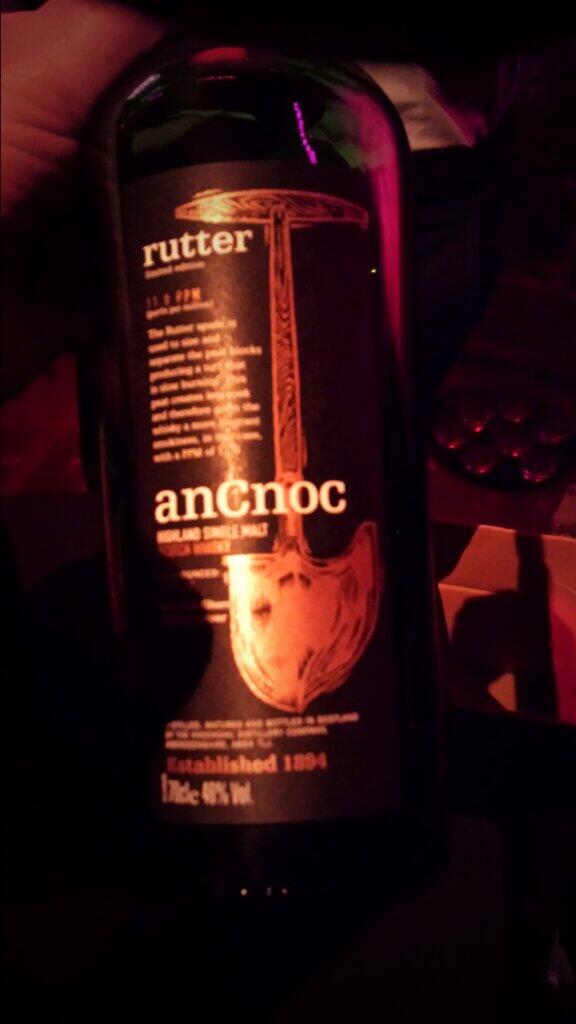
delicious. I've no idea what fraction of the deliciousness was whisky-based, but delicious it was.
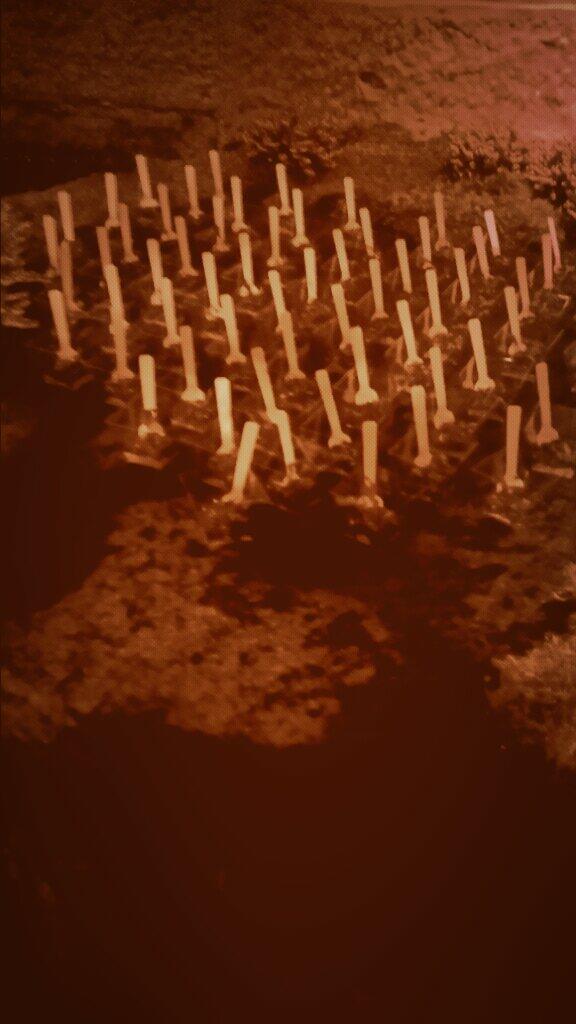
The Flaughter didn't seem to go so well with some chestnut cream filled macarons, but on the other hand the mini edible peat bogs complemented it superbly. I ate at least five.
The Tushkar? Well, it's a bit thicker or oilier than the other two, I think. And somewhat smoky.
I left, clutching my loot, having failed to network, and reflecting on the whiskies. I like the Rutter best, because it retains most AnCnoc character, combining sweet barley notes with light, dry smoke. The other two are good, but they could be from any number of distilleries.
My ratings:
Showing posts with label Speyside. Show all posts
2014-03-27
2013-10-31
Some recent Glen Elgins, and a Small Lament
Selling Whisky for a living is fun, and mostly pretty straightforward. "What do you like? Oh, well this and this are pretty similar, or this is pretty special".
But when I talk to whisky enthusiasts, fellow malt heads, I often find myself pursuing a gloomier line. "You had better grab this indie Mortlach while you can. The new official releases mean all future bottles will cost twice as much"; "Of course, it's all been matured on the mainland since the early 2000s so the taste is bound to change in a year or two".
And so it is with Glen Elgin, perhaps the fruitiest of Speysiders (or at least up there in the top three with Mortlach and Glenrothes). Until 2012, according to the Malt Whisky Yearbook 2013, Glen Elgin ran two different fermentations. During the week at 76 hours, and 120 hours over the weekend.
Following the addition of three new washbacks, so as to increase capacity by 50%, this approach has been dropped, and replaced with a standard 90 hour fermentation.
The result can only be a loss of complexity, which will become apparent in the malt in a decade or so. See this article at Chemistry of the Cocktail for an excellent and detailed explanation. You heard the moaning here first.
All of this is by way of a preamble to the following Glen Elgin tasting notes. It's a Speysider I particularly like, and I do hope my prefatory grumble will maker these expressions seem all the tastier.
Gordon & Macphail Connoisseurs Choice Glen Elgin 1996, 46%
nose: fruity, like fresh chopped apples. Light lactic notes, then light woody spice, then more fruit; chocolate banana sweets.
palate: rounded & fruity. Thick fruity syrup. Adding water brings out a tangy apple note.
(tasted 2013-10-08: not rated)
Blackadder Raw Cask Glen Elgin 17yo, 57.3%
nose: spicey (ginger), malty, slightly lactic, apple-y
palate: Quite light and dry and fruity. Water sweetens it and brings out a waxy toffee apple flavour, then sweet burnt toffee with a touch of smoke.
(tasted 2013-10-28: excellent)
Milroy's Glen Elgin 17yo 1995/2013, 46%
nose: airy, fresh, sappy and sweet. Grassy, then malt loaf
palate: sweet banana malt. Woody, then bananas and oranges. Fruity, thick and sweet. Malty
(tasted 2013-10-30 as part of a tweet tasting: not rated)
But when I talk to whisky enthusiasts, fellow malt heads, I often find myself pursuing a gloomier line. "You had better grab this indie Mortlach while you can. The new official releases mean all future bottles will cost twice as much"; "Of course, it's all been matured on the mainland since the early 2000s so the taste is bound to change in a year or two".
And so it is with Glen Elgin, perhaps the fruitiest of Speysiders (or at least up there in the top three with Mortlach and Glenrothes). Until 2012, according to the Malt Whisky Yearbook 2013, Glen Elgin ran two different fermentations. During the week at 76 hours, and 120 hours over the weekend.
Following the addition of three new washbacks, so as to increase capacity by 50%, this approach has been dropped, and replaced with a standard 90 hour fermentation.
The result can only be a loss of complexity, which will become apparent in the malt in a decade or so. See this article at Chemistry of the Cocktail for an excellent and detailed explanation. You heard the moaning here first.
All of this is by way of a preamble to the following Glen Elgin tasting notes. It's a Speysider I particularly like, and I do hope my prefatory grumble will maker these expressions seem all the tastier.
Gordon & Macphail Connoisseurs Choice Glen Elgin 1996, 46%
nose: fruity, like fresh chopped apples. Light lactic notes, then light woody spice, then more fruit; chocolate banana sweets.
palate: rounded & fruity. Thick fruity syrup. Adding water brings out a tangy apple note.
(tasted 2013-10-08: not rated)
Blackadder Raw Cask Glen Elgin 17yo, 57.3%
nose: spicey (ginger), malty, slightly lactic, apple-y
palate: Quite light and dry and fruity. Water sweetens it and brings out a waxy toffee apple flavour, then sweet burnt toffee with a touch of smoke.
(tasted 2013-10-28: excellent)
Milroy's Glen Elgin 17yo 1995/2013, 46%
nose: airy, fresh, sappy and sweet. Grassy, then malt loaf
palate: sweet banana malt. Woody, then bananas and oranges. Fruity, thick and sweet. Malty
(tasted 2013-10-30 as part of a tweet tasting: not rated)
2013-07-01
A couple of sherried Speysiders
Tamdhu 10 Year old was relaunched in May of this year, and on the day that I visited the distillery for the relaunch I also happened to open a bottle of Benriach 15 Year Old Pedro Ximinez Finish.
Tamdhu was, until 2011, owned by Edrington Group, who rather neglected it. Given that they also own Highland Park and Macallan, this is understandable. What makes less sense is this: when new owners Ian Macleod Distillers were assessing their purchase, they found a decade's worth of Tamdhu filled into high quality sherry casks. Why did Edrington chose to make expensive malt whisky and then not really bother to try and sell it?
Who knows, but the decision was taken to continue this policy, despite the cost (I'm told good sherry
barrels are costing £750 each these days), so that Tamdhu could be relaunched as a premium brand.
The new bottle design certainly stands out, but what of the liquid? Well, it's pretty tasty. Tamdhu new make spirit is fruity, light, and smooth, and takes very well to active sherry casks. The sherry casks give a dryness which nicely balances the naturally sweet spirit, and adds complexity. Good Stuff.
The Benriach is more heavily sherried, but in a different style. The use of Pedro Ximinez casks gives a much sweeter edge to the whisky, although this is well balanced by a vinous tang which keeps the sweetness from being cloying. One gets the impression that the sherry casks here were all first fill, something which clearly isn't the case with the Tamdhu. One also gets the impression of a lack of integration; finishing rather than maturing the whisky. Despite that, it's still Very Good Indeed.
Sherry casks are something of a tender topic for Scotch distillers these days, and whiskies such as these two are definitely in the minority. Which leads me to conclude: if you like the sound of these; if you like sherried whiskies generally - then drink more sherry!
2010-08-29
Aberlour a Go-go
Another entertaining tasting at the Bothy, this time, a Sunday afternoon whisky school, with some very interesting food matching going on.
Dalwhinnie 15yo was rather excellent tasted with honeycomb nougat. Ardbeg 10yo went surprisingly well with a mildish remoulade; the horseradish wasn't overly fiery, and the creamy dressing pulled everything together nicely. But the culinary star of the day was Aberlour A'Bunadh batch 31.
A'Bunadh is a true sherry monster, in the best way possible. This batch seems particularly wine-y and fresh - it reminds you that sherry is a wine, and sometimes a rather fruity one. But more than that, and always, A'Bunadh tastes of cherries; sweet red cherries, not the black ones.
So served with a big fat cherry that had been dipped in dark chocolate, the Aberlour was very heaven (very heaven = 5).
Dalwhinnie 15yo was rather excellent tasted with honeycomb nougat. Ardbeg 10yo went surprisingly well with a mildish remoulade; the horseradish wasn't overly fiery, and the creamy dressing pulled everything together nicely. But the culinary star of the day was Aberlour A'Bunadh batch 31.
A'Bunadh is a true sherry monster, in the best way possible. This batch seems particularly wine-y and fresh - it reminds you that sherry is a wine, and sometimes a rather fruity one. But more than that, and always, A'Bunadh tastes of cherries; sweet red cherries, not the black ones.
So served with a big fat cherry that had been dipped in dark chocolate, the Aberlour was very heaven (very heaven = 5).
2010-07-12
Where's the Sherry?
Well who'd have thought it? Mortlach is a fruity whisky.
I tasted this particular bottling (Cadenhead Mortlach 14yo 1992/2006, 46%) blind, and never in a decade would I have picked Mortlach as the source, because, to repeat my initial question, where's the sherry?
Actually, no, don't tell me. Leave it in Spain. Mortlach without sherry influence is a lovely dram, all green apples and highland toffee and angelica and very, very fresh. Also, light and watery - not lacking intensity of flavour, I mean the texture is watery. A breakfast Mortlach, or, (for the more puritanical) an aperitif.
It does say on the bottle that this whisky has been matured in sherry casks, but they must have been very old, for there really isn't any sort of influence on the flavour. And a good thing too, say I. Mortlach 14yo, a very good thing indeed, 4+.
I tasted this particular bottling (Cadenhead Mortlach 14yo 1992/2006, 46%) blind, and never in a decade would I have picked Mortlach as the source, because, to repeat my initial question, where's the sherry?
Actually, no, don't tell me. Leave it in Spain. Mortlach without sherry influence is a lovely dram, all green apples and highland toffee and angelica and very, very fresh. Also, light and watery - not lacking intensity of flavour, I mean the texture is watery. A breakfast Mortlach, or, (for the more puritanical) an aperitif.
It does say on the bottle that this whisky has been matured in sherry casks, but they must have been very old, for there really isn't any sort of influence on the flavour. And a good thing too, say I. Mortlach 14yo, a very good thing indeed, 4+.
2010-06-28
Whither Cragganmore?
I'm not the only one, I think, who has the idea that Cragganmore isn't what it was ten years ago.
My - admittedly not very systematic - impression was that the spirit had become lighter and less intense. Obviously, this called for a taste test, so I rummaged about the interwebs and came up with a Gordon & MacPhail 1969 Cragganmore from the old brown label Connoiseurs Choice series. Conveniently this was bottled at the same 40% as the Official 12 Year Old I compared it with (which was bottled around 2010).
Neither of these is an outstanding dram, although they are both good single malts. The two were pretty similar, unsurprisingly, but I did find that the older bottling had a little more complexity. It seemed to have rather more woody notes, in an elegant sort of a way, and I was pretty sure that there was a touch of smoke about it (although this could be a barrel effect I suppose). On the whole, there wasn't a great deal between them.
In conclusion, I have to say case not proven. And I hereby resolve to drink whisky with a little less cynicism in future.
My - admittedly not very systematic - impression was that the spirit had become lighter and less intense. Obviously, this called for a taste test, so I rummaged about the interwebs and came up with a Gordon & MacPhail 1969 Cragganmore from the old brown label Connoiseurs Choice series. Conveniently this was bottled at the same 40% as the Official 12 Year Old I compared it with (which was bottled around 2010).
Neither of these is an outstanding dram, although they are both good single malts. The two were pretty similar, unsurprisingly, but I did find that the older bottling had a little more complexity. It seemed to have rather more woody notes, in an elegant sort of a way, and I was pretty sure that there was a touch of smoke about it (although this could be a barrel effect I suppose). On the whole, there wasn't a great deal between them.
In conclusion, I have to say case not proven. And I hereby resolve to drink whisky with a little less cynicism in future.
2010-05-07
Off to Alloa...
...for a charity fundraising whisky tasting. The six whiskies were all donated, so there was no theme, but some interesting contrasts arose anyway.
Tullibardine was mothballed in 1995 and did not produce whisky again until 2003, when they became independent. They have approached the problem of this gap in production (which leaves them unable to offer a ten year old whisky until 2013) and made a virtue of necessity by presenting the whisky as a Bourbon Cask Edition, which is rather like Hovis offering their bread as the Yeasted Edition. It's a light easy whisky which reminded me of Auchentoshan 10yo, being spirity and sweetly floral. Good, 3+.
Tormore 12yo and Dufftown 12yo (sorry Diageo, Singleton of Dufftown) were both very easy Speysides in the toffee-ish mode, although I did see an interesting herbaceous aftertaste in the Tormore. Bunnahabhain 12yo was also an easy malt, and tonight it seemed maltier than usual for an Islay whisky.
Lagavulin 16yo and Laphroaig Quarter Cask were a fine pairing. The Lagavulin (the oldest standard release of any malt?) is all smoke and brine and intense oily saltiness, but the Quarter Cask has reined in the usual Laphroaig TCP aroma somewhat, perhaps allowing the whisky to appeal to a wider audience. The texture, too, is easier -smoother- than the ten year old. Both these whiskies I rated as excellent, 4 to 4+.
The best description of the night, about the Lagavulin, was, "like a mixture of amyl nitrate, ether and methylated spirits", from a chap who claims that he fuels model airplanes with such a mixture.
Tullibardine was mothballed in 1995 and did not produce whisky again until 2003, when they became independent. They have approached the problem of this gap in production (which leaves them unable to offer a ten year old whisky until 2013) and made a virtue of necessity by presenting the whisky as a Bourbon Cask Edition, which is rather like Hovis offering their bread as the Yeasted Edition. It's a light easy whisky which reminded me of Auchentoshan 10yo, being spirity and sweetly floral. Good, 3+.
Tormore 12yo and Dufftown 12yo (sorry Diageo, Singleton of Dufftown) were both very easy Speysides in the toffee-ish mode, although I did see an interesting herbaceous aftertaste in the Tormore. Bunnahabhain 12yo was also an easy malt, and tonight it seemed maltier than usual for an Islay whisky.
Lagavulin 16yo and Laphroaig Quarter Cask were a fine pairing. The Lagavulin (the oldest standard release of any malt?) is all smoke and brine and intense oily saltiness, but the Quarter Cask has reined in the usual Laphroaig TCP aroma somewhat, perhaps allowing the whisky to appeal to a wider audience. The texture, too, is easier -smoother- than the ten year old. Both these whiskies I rated as excellent, 4 to 4+.
The best description of the night, about the Lagavulin, was, "like a mixture of amyl nitrate, ether and methylated spirits", from a chap who claims that he fuels model airplanes with such a mixture.
2007-03-21
Tonight's Tasting Brought to you by the Letter B
Small Island Boy was up to his tricks again, this time with some brilliant whisky. He gave us two Balvenies versus two Bruichladdichs (kind of) and then finished off with that ne plus ultra for whisky-twitchers, a bottling from a deceased distillery.
It was a hellish cold night in Partick, but after the tasting I found myself to be quite comfortable sans jacket. More to the point, all the next day I was clad two layers lighter than usual saying to myself from within my cereal glow, "uisge beatha truly is the water of life" - I really have to tell you, whisky fires you up and gets you going, it fires and inspires me, all hail the acrospire!
Whoops... slightly carried away there. For your convenience: acrospire defined. Things not any clearer? Just ask SIB, for he is the Man Who Knows.
The whiskies:
Bruichladdich 1993 recioto cask finish versus Balvenie 1993 Port wood
I liked the nosefeel of the Laddie - kinda velvety - but the Balvenie won this bout, by virtue of its relaxed mellowtude and digestive biscuit finish.
Port Charlotte 5 year old versus Balvenie 14 year old roasted malt
I suppose the malt one might imagine regularly sipping, of all tonight's offerings, would be this Balvenie, for its easy character, and especially for the hint of honey-dipped cigars it occasionally offers. Yet the winner here was the PC5. Freshness, that full on Islay Wow! character that first drew me to malt whisky, or just the complexity in the glass. Or all three...
the Brora 30 year old scored highest for the night (4 - 5: excellent - astonishing) and brought me a new organoleptic experience : the scent of lilies. Only once, and fleetingly, but lilies. From malt whisky. There were other things, perhaps less desirable. Cowbyres. Sunwarmed animals. Seabirds. Leaves - mouldering ones. Caboc (also know as 'Here, this butter is past the sell by date. I know! Let's repackage it as cheese')
A great night. Thanks, SIB. Thanks, 'B'.
It was a hellish cold night in Partick, but after the tasting I found myself to be quite comfortable sans jacket. More to the point, all the next day I was clad two layers lighter than usual saying to myself from within my cereal glow, "uisge beatha truly is the water of life" - I really have to tell you, whisky fires you up and gets you going, it fires and inspires me, all hail the acrospire!
Whoops... slightly carried away there. For your convenience: acrospire defined. Things not any clearer? Just ask SIB, for he is the Man Who Knows.
The whiskies:
Bruichladdich 1993 recioto cask finish versus Balvenie 1993 Port wood
I liked the nosefeel of the Laddie - kinda velvety - but the Balvenie won this bout, by virtue of its relaxed mellowtude and digestive biscuit finish.
Port Charlotte 5 year old versus Balvenie 14 year old roasted malt
I suppose the malt one might imagine regularly sipping, of all tonight's offerings, would be this Balvenie, for its easy character, and especially for the hint of honey-dipped cigars it occasionally offers. Yet the winner here was the PC5. Freshness, that full on Islay Wow! character that first drew me to malt whisky, or just the complexity in the glass. Or all three...
the Brora 30 year old scored highest for the night (4 - 5: excellent - astonishing) and brought me a new organoleptic experience : the scent of lilies. Only once, and fleetingly, but lilies. From malt whisky. There were other things, perhaps less desirable. Cowbyres. Sunwarmed animals. Seabirds. Leaves - mouldering ones. Caboc (also know as 'Here, this butter is past the sell by date. I know! Let's repackage it as cheese')
A great night. Thanks, SIB. Thanks, 'B'.
Subscribe to:
Posts (Atom)