2017-04-05

My Big Book of Grapes

A few years back I received the wonderful gift of Wine Grapes : A Complete Guide to 1,368 Vine Varieties, including their Origins and Flavours, by Jancis Robinson, Julia Harding, and José Vouillamoz.

It came in very handy last night on tasting this Lyrarakis Psarades Dafni 2015. It was by far the most unusual wine I have tasted in the last I don't know how many months. Just look at my tasting note:

Nose: Vermouth, bay leaves, herbs. slightly sherried. A green, nutty note.

Palate: Dry, mid- bodied, mid acidity, mid alcohol. Herbal, green, bay leaves. Very very distinctive, unusual, delicious.

No kidding, this wine tasted remarkably like Noilly Prat. It was delicious.

So anyway, turning to Wine Grapes I learned that Dafni is a variety from the Greek island of Kríti (aka Crete), which had all but disappeared by the end of the 1980s. Fortunately, Lyrarakis, the producers of this lovely wine, continued to cultivate it, and is now back up to around 15 hectares. It seems that it needs to be intensively pruned for low yields in order to give these lovely flavours, which is perhaps why it fell out of favour.

I'm so glad it survived. I don't suppose I'd want to drink it all the time, but for a food-friendly change of style it's just about perfect.

If you don't yet have a copy of Wine Grapes, I cannot recommend it highly enough. It's worth it for the pedigree charts alone. Here's a not very good picture of the entry for Dafni:

2017-02-17

Tasting Note: If Savoury Frangipane Were A Thing

To be honest, I only wrote this tasting note because I wanted to use the title. That aside, I'm enjoying a great glass of wine.

Vajra is an absolutely top notch producer of wines in Piemonte, Italy. This bottle is from an estate that Vajra bought towards the end of the 2000s. It's Luigi Baudana Dragon 2015, a fantastic blend of 50% Chardonnay, 30% Sauvignon Blanc, 15% Riesling and 5% Nascetta (whatever the heck that is).

My tasting note:

Nose:  Complex, nutty, and herbal, with a suggestion of something phenolic (or terpenes?) possibly analogous to the petrol note in Riesling. If savoury frangipane were a thing, this is how it would smell.

Palate: Complex, rounded, and delicious. The acidity is somewhere between lemon juice and grapefruit pith. Green notes are less in evidence than on the nose. There's something of the phat of a brazil nut. A very clean refreshing finish. Nothing of the individual grape varieties, but that is absolutely not a criticism.

Conclusion: This is superb wine, and awfully cheap for what it offers. Also, it has a dragon on the label.

2017-01-15

Dom Pérignon


One of the many benefits of working in the booze industry is the quality of the drinks on a staff night out. Our latest expedition began by setting a fairly high bar, with a mini Dom Pom vertical, of the 2006, 1999, and 1982.

(It's interesting to note, by the way, that Dom Pérignon these days doesn't mention Moët et Chandon on the label - perhaps they feel it makes the brand seem more exclusive?)

The 2006, in its first plénitude, was big and bold: fresh icing sugar, sharp floral aromas, but also with a touch of mushroom. The palate was soft, sherbety, with lemon notes and a beautiful rounded flowery character. The finish was noticeably drier than on the other two wines.

The 1999—not a stellar year, but, by my calculation and triangulation based on what the DP website says, in its second plénitude—wasn't any better (in the hedonic sense) than the 2006. Indeed, I think I enjoyed it a notch less. But the flavours were quite different. The nose was both spicy and mineral laden. After a while a floral component rather like that in the 2006 appeared. The palate was intensely mineralic, tangy and grapefruity. It was also richly floral—roses I think—with the richness extending to ripe fruit.

The 34 year old wine, almost but not quite flat and a deep, deep gold, was something else. Well into its third plénitude, this was a glorious glass of fizz. The nose had some of the floral elements present in the 2006 and 1999, but ah!, the rest of it. Runny honey on toast, sweet roasted almonds, buttery caramel, and a shining warmth. Liquid sunshine indeed. The palate showed the slightest spritz, and a fair bit of oxidation (good oxidation, like Madeira), despite which there was still a very decent level of acidity. The flavours were all sorts of fruit: juicy and fresh berries, raisins, figs, lemons. Just delightful.

The Dom Pérignon 1982 wasn't the oldest wine we tasted tonight, but for me it was far and away the finest. I'm usually more of a Billecart fanboy, but if all DP was this good...

2016-11-11

Needs More Juniper

I'm currently working my way through four dozen gin samples for the World Drinks Awards, a process which was delayed by an absolute stinker of a cold (necessitating a rather busier than anticipated weekend ahead).


Oddly, and despite the name being a bit of a clue as to what the drink should taste like, some of these gins need more juniper.

Or perhaps it's not odd. Perhaps, in the current crowded market of new gins, some poor sods have decided that their USP is going to be Lack Of Juniper. Who knows?

Incidentally, I reckon we have just hit Peak Gin. How do I know this? Well, on the Archers, Toby Fairbrother is trying his hand (and failing) at gin distilling.

2016-09-11

Classier Than Your Average Pocket Rocket

I bought this a while back, not really knowing what it was. Well obviously, it's Mural do Favaios, a fortified non-vintage Moscatel from the Douro, but why is it in this tiny crown capped bottle?

It sat around, not being drunk (for want of a suitable occasion), until tonight, when I had a sudden eureka moment - it's a pocket rocket! Which is to say, a small, strong, readily consumed slug of booze, in a handy, easily concealed format.

Having figured it out, and knowing I'd never use it as intended, there was nothing else to do but drink it. Which I did. Here are my observations.

Nose: faintly reminiscent of oloroso sherry. Or tawny port. Or somewhere in between. Toffee, and a hint of struck match.

Palate: 17%? Really? Actually, there is a bit of heat in the finish, but the attack and mid palate are very light. Watery, if one could have sticky water. For sticky it is, in a pleasant toffee apple fashion.

Conclusion: It's very simple, but it's also rather direct and to the point, the point being a strong wee sweetie. I sort of wish I'd bought two...

2016-04-16

Tasting Note: Chassenay d'Arce Pinot Blanc 2006


Nose: yellow fruit. Clean and fresh. Nothing to say that it's a ten year old wine. Tangy. Citrus and pineapples. Under-ripe honeydew melon rind.

Palate: there is some evolution, but it still feels pretty fresh. Very tangy and tart. Real yellow fruit character, along with a light body.

Conclusion: this is a lovely wine, and distinctively different - I've never encountered that pineapple note in any other champagne. And, as with many wines from the Côte de Bar, it's very good value for money.

Champagne Grapes
Three grape varieties, Pinot Noir, Pinot Meunier, and Chardonnay, account for nearly all of the production in Champagne, but (of course!) things are a little more complicated than that.

Besides the more than 30,000 hectares devoted to the big three, there are a few hectares (less than a hundred, I believe) given over to Pinot Blanc, Pinot Gris, Arbane, and Petit Meslier. Producers such as DrappierMoutard, and Chassenay d'Arce turn out small quantities of these unusual wines, but they are not easy to find.

And for the truly pedantic among us, the Champagne appellation law of 1919 can be read as meaning that all members of the Pinot family may be used for Champagne, which seems to me like the perfect excuse for some bolshie Brit to go over there and make fizz using Viognier and Aligoté.

2016-03-07

A Visit to Westons


After spending an intense day and a half helping my very good friends at Little Pomona bottle up a batch of their cider, it was instructive to go and see Westons at Much Marcle, who are most decidedly at the other end of the spectrum, both in size and in their practice.

The site is visible from quite a distance, thanks to the dozens of vast storage tanks which give it something of the air of an oil refinery. These 200,000 litre tanks hold the pressed, sterile filtered juice so that Westons can ferment and produce all year round.


The tour is an interesting mixture. It begins in the older buildings dating from perhaps a century ago, and the emphasis is on traditional production methods; there's even a stone mill wheel on display. But  then as we move through the production area we see, for example, a press as big as a house (granted, only a small holiday chalet, but I do literally mean a press as big as a house). And then again, a series of giant wooden tuns huddled together, somehow seeming to have a cathedral-like air to them.

Westons are very proud of their modern production methods. All the apple juice they press is passed through a micro filter to remove any trace of yeast, and then stored in the giant spaceship booster tanks until it's needed for fermentation, thus allowing them to produce continually all year round.

The juice is then fermented to a strength of 11%, in the pictured wooden vats, after which it is blended to whatever strength is required.

It's a curious mixture of modern and traditional. Fermenting in wooden tuns, yet sterile filtering the juice. Much of what Westons produce is sweetened, but then many small craft producers also accept the market demand and sweeten some part of their output. And Westons do make some very good vintage, oak-aged cider.

As you can perhaps tell, I'm in two minds about Westons. I'd far rather have a funky single varietal cloudy cider from Tom Oliver or Ross-on-Wye, but on the other hand if they grew big enough to be available in Sainsbury's, the liquid would very likely not be as interesting. 

I think the way to look at Westons is rather like Guinness or Lagavulin. They're all big, heavily marketed brands, but if you go into an otherwise uninspiring pub and see them, then you know you've got something decent to drink. Perhaps not amazing, but good enough.

2015-08-03

Rogue Voodoo Doughnut...

... is the kind of name that could easily embarrass a person placing a drinks order. And when this, ahem, interesting bottle shows up, well, it ain't going to be easy to hide. The liquid, however, turns out to be remarkably drinkable.

The full name of this beer is Rogue Voodoo Doughnut Pretzel, Raspberry & Chocolate Ale, but when I smelled it, the dominant aroma wasn't Pretzel, but chocolate - the kind of cheap chocolate used in Easter eggs, I think. There's also a decent backbone of malt somewhere in the background.

The palate is very sweet - perhaps a little too sweet for a 5.4% beer - with plenty more of the cheap chocolate notes, along with a very enjoyable malt flavour. The raspberries provide some tartness rather than any flavour, and I couldn't pick out any pretzel at all. None at all.

In conclusion, I'd have to say the packaging is something of a sleight of hand. This beer is much more sensible and beer-like than I had expected, and really rather enjoyable.

2015-07-21

It Is To Disappoint

So I finally managed to obtain some Casa Lluch Verdil 2014, long after my precious few bottles of a previous vintage were finished. Of course, I failed to check all the details, and - dammit - they've switched to stelvin closures.

Now this is definitely carping on my part, because I do think the current vintage is a pretty decent drop, but it's not as good as it was before. I'm going to have to keep the rest of this case for years before it evolves to where I want it.

Anyway, here's what's good about the wine:


  • It's organic
  • It has a pretty label
  • It's a very obscure grape variety
  • It's really rather tasty, like so:-


The nose is fresh, light, and lively, with tart citric notes and a (very little) something mealy or creamy. The palate is tangy - grapefruit and lime, but also mouth coating and slightly oily. The lime note is almost coconutty (which ties in, I think, with the mealy note on the nose). The finish is refreshingly sour.

Overall, it's a direct, refreshing summer white (with enough weight to handle salads and other light dishes, I reckon). Just not as good as the previous vintage, that's all.

2015-06-30

Billecart-Salmon Cuvée Nicolas François Billecart 2002

By a stroke of good fortune, Small Fierce Glasses and I were able to attend a lunch at Prestonfield House in Edinburgh, hosted by Billecart-Salmon, which served to introduce the recently released Cuvée Nicolas François Billecart 2002.

Arriving rather early, we sat on a rooftop terrace in the shadow of Arthur's Seat, sipping the excellent and bracing Vintage 2006 (a polyglot and slightly unhelpful name, omitting to mention, as it does, that this is an Extra Brut champagne, with a dosage of only 1.5g/l). The Vintage is a fairly new venture for Billecart, this being only the second release, but as we sit enjoying the sun and the fizz it is definitely my favourite Billy.

Some indeterminate time later we are ushered into a room which has never knowingly had any item of decor removed, ever, and are there presented with the Blanc de Blancs Grand Cru 2004. Immediately, this is my favourite Billy. It's honeyed, with a glorious perfume of white flowers and biscuit dough, and it is even a little buttery. The palate matches the nose perfectly, and the mousse is billowingly soft (all of today's champagnes were decanted, which allows the wine to breathe and lessens the rasping initial carbonic acid bite of a freshly popped bottle). Over time, as the fizz lessens, the wine becomes ever more vinous. Not in an obvious, Burgundian Chardonnay1 sort of way, mind you. Vinous, but still Champenois.

Production of the Blanc de Blancs is 30,000 bottles, using grapes sourced from five villages in the Côte des Blancs - I wonder which of the six Grands Crus was snubbed?

After a slightly embarrassing interlude (the food was distinctly fleshy, and I had foolishly assumed that in 2015 an establishment so prestigious would automatically be acreophage-friendly) the raison de déjeuner is poured. The Cuvée Nicolas François Billecart 2002 is intense, complex, interesting, and distinctly youthful. Aromas of white and yellow flowers vie with fresh blonde wood and, oddly, malt. There's honey as well, but an older, spicier honey. The palate is balanced and rounded, salt and honey and lemon pith all complementing each other. As with the Blanc de Blancs there's a vinous quality which champagne rarely shows. Whilst I'm enjoying this fine fizz immensely, the Blanc de Blancs remains my favourite.

The Nicolas François is produced using Pinot Noir from Aÿ and Mareuil-sur-Aÿ along with Chardonnay from Avize and Chouilly.

Billecart-Salmon is arguably the best of all the champagne houses. It gets my vote for its ability to produce wines that manage to fuse delicacy and intensity, finesse and sheer unadulterated hedonistic joy. Long may it thrive.

(Oh. We may well have drunk some Gevry-Chambertin and 30 year old Coteaux de Layon too. I wasn't really paying attention to the other wines)

1: I love Burgundy. But who can resist the opportunity to use 'Burgundian' as a put-down?


2015-05-01

Waulkmill Mooseheid Perry

Perry seems to come in two varieties. There's the delicate, elderflower and fresh pear juice variety, and there's the more full bodied, tannic, occasionally funky type. The latter is much closer to cider, and can be very enjoyable, but the former, rarer version is, in my opinion, the more exciting drink. Mooseheid is very definitely at the cider-y end of the spectrum.

nose: initially very good in a brisk way, then rather sulphurous for a few minutes. With time and air, a proper woody (or tannic?), cidery funk develops.

palate: there's a light spritz. It's dry and fruity, with a light tannic note. Over time the pear flavours come through; very white pears, rather than green or yellow (I wonder if I'm actually picking up some stone fruit notes?). Overall it's well balanced, with pleasant tannins, and I reckon it's better than last year's bottling too,

Chris Harrison of Waulkmill brews a variety of drinks from apples and pears. Some, like the Irn Bru flavoured Clan McFannie, are alcopops. Mooseheid, despite the jokey label, is a proper perry. Waulkmill Mooseheid Perry: Very Good

2014-06-05

Glen Garioch 1998 Vintage

At a tasting of the Glen Garioch range last night Phil Nickson of Morrison Bowmore Distillers (MBD) treated us to a preview of the latest vintage release, a 1998 distillation matured in ex wine casks, specifically Saint-Julien, a Bordeaux red wine appellation.

We started with the core expressions, the Founder's Reserve and 12 Year Old. These are drams of which I think highly, in part at least because they taste just right at 48%. This is not a common bottling strength, suggesting that it has been chosen for reasons of taste (easier to do if you only shift 19,000 cases a year rather than say 120,000 like Bowmore). Two sweet and spicy drams, good to very good.

Next was the cask strength 1999 Sherry vintage, first released last year. Very much in the bold spicy Glen Garioch style of the first two whiskies, it also showed loads of somewhat rubbery sherry, and a pile of sweet red fruits; tinned strawberries perhaps. The finish was treacly and spicy. Excellent.

Glen Garioch 1991, released in 2010, is an ex bourbon expression, dating from when Glen Garioch malted its own barley with a bit of peat in the mix.  A very elegant dram (most Glen Garioch is what I'd call powerful rather than elegant), with smoky honey and coconut notes and a milky waxy finish. Very Good.

And so to the drum roll dram, the new 1998 vintage. I have to declare an interest here. I am a claret fanboy, specifically the Northern Médoc, so I may be a little biased towards this dram. It's worth noting that Saint-Julien is best known for Cabernet Sauvignon, a cask type which is also used in the assemblage for Dalmore King Alexander, a superb whisky, albeit overpriced, and in the cracking Longrow Red from Springbank.

The spice notes I found in other expressions this evening were much rounder and softer in the '98. There was a qualitative difference in the fruit character too, with definite fruit-yoghurt notes, where the other whiskies showed dried fruits and lacked the creamy, buttery note. On the other hand, there is a bit of spirit burn, which the other drams didn't have. The palate is complex, with typical Garioch spice, soft buttery-treacle notes, and a wee touch - hard to pin down - of something savoury. Most decidedly excellent.

The one caveat I have regards the price. This release, 15 years old, bottled at 48%, costs about £100. The 1991, at cask strength and 19 years old, can be had for £70. It seems to me that MBD are cashing in on the current whisky bubble.

Or perhaps I just didn't like the whisky enough. Certainly, after the tasting, three people thought it was good enough to pre-order and pay for.

By way of a bonus, Phil then treated us to a wee taster of two other expressions, the Virgin Oak and the 1986. The Virgin Oak is delicious, although it perhaps ought to be called Bourbsky or Whisbon, since white oak is such a dominant flavour (irrelevant aside: naturalists say that a typical oak tree is home to some three hundred species of other plants and animals. Is it unreasonable to call humans the three hundred and first, since the flavour of oak is so important in so many human beverages??).

The 1986 was a fine, fine drop, and made all the finer by the subtle thread of smoke running through it. Since closing their floor maltings in 1994, Glen Garioch has been made with unpeated barley. On the basis of the '86, I would call that a big fat mistake.

2014-05-14

Create:Eat:Whisky

To Edinburgh for the opening session of Create:Eat:Whisky, which I'd been looking forward to ever since the anCnoc #LightOnDark event in March, because the food/whisky pairings at that event, by Jelly & Gin, were so very fine.

The venue was hidden behind a very unassuming frontage, through a wicket in a battered old yard entrance near the bottom of Leith Walk in Edinburgh. I stepped through into a dark, peat filled space, beyond which I could see smoke drifting from the dimly glowing interior.

Inside, the old Nestle factory had been equipped for fine dining, with linen table cloths and little wooden boxes containing canapés.


After a very atmospheric introductory video featuring, Wizard of Oz style, the disembodied voice of Richard Patterson doing his "Hello, How are you" schtick we tucked into said canapés, including some very fine Ayrshire Bonnet cheese, paired with Jura Elixir, a twelve year old expression. The whisky cheese combination really worked very well, especially in terms of texture (I think because Jura is a soft/mild whisky), and the fruit flavours in the pineapple chutney definitely enhanced the malt.

Jura, to me, is a decent malt, but not more than that. It's soft and easy going, and seems to suit palates not used to whisky. Perhaps this softness makes it easier to match to food. Or perhaps Jelly and Gin are geniuses. There were some outstanding flavours going on here.

Next was a wholly carnivorous serving, which looked ace but did not pass my lips. The whisky was Jura Prophecy, the heavily peated one. This is a super sweet toffee-ish dram with a goodly hit of mellow rounded smoke. Decent enough. Prophecy always reminds me that Jura likes to position itself as the whisky for every occasion. Every bottle of Jura has a kind of flavour wheel printed on the box with - would you believe it! - a Jura in every quadrant.

Pudding!
Third up was Origin with a pear compote. This was just delicious. The texture was right, the cooked pear brought out a similar note in the whisky, the cream I could have eaten by itself. Never before has Jura 10 Year Old tasted so good.

We finished with the Diurach's Own (a 16 Year Old) and some artisanal chocolates, which I didn't eat, preferring to take them home as tiny bribes for my family. However, I do know from other tastings I've done that Jura is the right kind of whisky for chocolates - if it were woodier the oak would seem bitter, and it's sweet enough too.

An aside: Jura emphasise (on this page) that the Diurach's Own is matured in ex Amoroso Oloroso sherry barrels. But that's just cheap Oloroso which has been sweetened, which is perhaps not the greatest recommendation.

The music (see below), subtle lighting, and props never intruded on the organoleptic experience, and the food pairings definitely made Jura taste much more interesting than it normally does. Well done to Jelly & Gin.


2014-04-29

A Bruichladdich Tasting with Jim McEwan

Since 2001 Bruichladdich tins have carried the tag line "Progressive Hebridean Distillers". The 'Laddie has built a reputation as a distillery willing to experiment - Octomore, Black Arts, and the quadruple distilled X4 come to mind - and certainly the packaging is very modern.

Bruichladdich (like many an Islay malt) has also acquired a fanatical following, at least in part because of the work that Head Distiller Jim McEwan has done over the last thirteen years. So when Glasgow's Whisky Club invited him to host a tasting, there was a rush to sign up - I've never seen so many club members gathered in one place before.

Mr McEwan is a compelling and passionate speaker, and we were treated to a fiery defense of the Way of the Laddie, along with some great anecdotes of how distilleries worked in the 1960s. And of course, some very fine whiskies.

The first three were from the latest iteration of the Bruichladdich range. Bruichladdich Classic is a no age statement malt bottled at 50%, which replaces the Laddie Classic 10 Year Old (which was bottled at 46% and cost rather less). It has the pure, clean, malty character which, along with the lactic or sour note, defines Bruichladdich. Sadly, the new Classic isn't as elegant as the Ten. It's a fine dram, but the quality has dropped a notch. Here's hoping the distillery can manage to build up stocks to the point where the Ten can be reintroduced.

Bruichladdich Islay Barley 2007 is one of the products which justifies the "Progressive" tag. I wish more producers were exploring this kind of ultra local provenance, but at the moment there's just Bruichladdich, Kilchoman, and the not yet released Daftmill. Comparing it with the Classic, this whisky seems sweeter and creamier, and also more elegant. A very fine drop indeed.

The third "standard" was Port Charlotte. Again, no age statement (although peaty whiskies - for me anyway - seem to taste better at a young age). Really rather smoky, but also very very fruity, it still manages to show some of the Bruichladdich elegance.

The other three drams were (I think) cask samples. In the past you could be sure they would be released, but the latest Bruichladdich range is minimalist, so these may never be commercialised.

A 22 year old which has spent four years in a Haut Brion cask was my dram of the night. I have a real weakness for wine cask flavours, and this had everything I love. Elegance, vinosity, fruit (strawberry jam on buttered toast into raspberry balsamic vinegar), a slightly dirty note (faint struck match, plus very faint mushroom), it was truly complex. Superb whisky.

Don't even ask
A 28 year old from an Oloroso butt was perhaps not the best example of Bruichladdich character, but it was an outstanding example of sherry cask character. Rounded, sweet (but with big drying, grippy oak spice in the finish), nutty, treacle-y, I really enjoyed it. On reflection, there was some 'Laddie character to be found, in the balance and elegance of the finish. Another superb whisky.

We finished with some 2008 Octomore from a virgin oak cask. Of all the Octomore releases, I've only ever really enjoyed the Comus, which had some sweet wine cask influence. My first taste of this left my palate anaesthetised (64.7% ABV you see), but once I got over that the combination of ultra-peat and ultra-oak resolved into a rather tasty barbeque sauce effect. I'd still call Octomore a concept whisky rather than a drinker's dram, but this one was better than most.

At the end of his presentation Mr McEwan got us all to stand on our chairs with a foot on the table, so that we could toast each other properly (that is, by roaring at each other in Gaelic). All tastings should finish thus. A very fine evening. Here's hoping that 22 Year Old Haut Brion cask gets bottled sometime soon...

2014-04-19

Glenglassaugh Torfa

Newly arrived this week is a no-age-statement peated whisky from Glenglassaugh distillery, Torfa (which means turf in Old Norse. I spent an entertaining twenty minutes trying to look this up. The closest I could get was torf).


Glenglassaugh, since the change of ownership in 2008 have been pursuing a strategy of releasing very old and very young whiskies - a necessity after twenty two years silent. There were a series of three new make spirit drinks, alongside such beautifully aged drams as the 26 Year Old and the 30 Year Old. The current core dram is the Evolution, which was initially released at cask strength but is now bottled at 50%.

Torfa is, like the Evolution, bottled at 50%. It's a pale whisky. The nose is fairly intense and has lots of dry smoke, with lighter notes of heather and iodine or salt. I also found a suggestion of honey.

The palate is soft and slightly oily, with honey and plenty of dry smoke, shading into a metallic warm aroma (like heating a cast iron pan with nothing in it). The palate doesn't have any of the iodic notes from the nose, which is a definite difference from Islay style peated whiskies.

With water this is a very easy drinking dram, nicely smoky, although perhaps a little simple in the finish. Best to drink it at full strength I think.

Overall I'd say this is a pretty decent whisky from Glenglassaugh. Onwards & upwards!


2014-04-18

Indeterminate Validity

Germana Cachaça Caetano's
This is the kind of drink I just love - and that's even before the bottle is open. The bottle (which is surely just a re-purposed beer bottle) is too big for the 60cl it contains, so it only looks three-quarters full. It's sealed with a crown cap, for goodness' sake, as if you are meant to drink it all in one sitting. The label proudly declares the contents to be of "indeterminate validity", whatever the heck that means. Frankly, I find all these eccentricities very appealing.

The liquid does not disappoint. It smells and tastes like nothing else I have ever experienced. The nose has three distinct and very different phases. Initially is is very green, vegetal and herbal, with sour-sweet notes of dill and fermentation aromas. Then there's a much sweeter phase, with buttery honey, chalk, and cherry. The third phase is savoury, oscillating between olive brine, dill balsamic vinegar, and olive honey. And that's just the nose.

The palate is sweet, and very new-make spirit or grappa-like. It's a little hot or peppery initially, then there's a very strange flavour which I can best describe as something like an olive and honey tapenade on buttered bread.

This is a deeply interesting and unusual spirit which got me quite excited - I'd rate it as most excellent.


About Cachaça
Cachaça is a kind of rum - unique to Brazil - made from sugar cane juice. This makes it roughly comparable to rhum agricole, such as is produced in Martinique or Guadeloupe. It's probably best know as the spirit ingredient in a caipirinha. Most cachaça is unaged, and according to David Wondrich it "looks like vodka and tastes like it was aged in old truck tyres".

2014-04-04

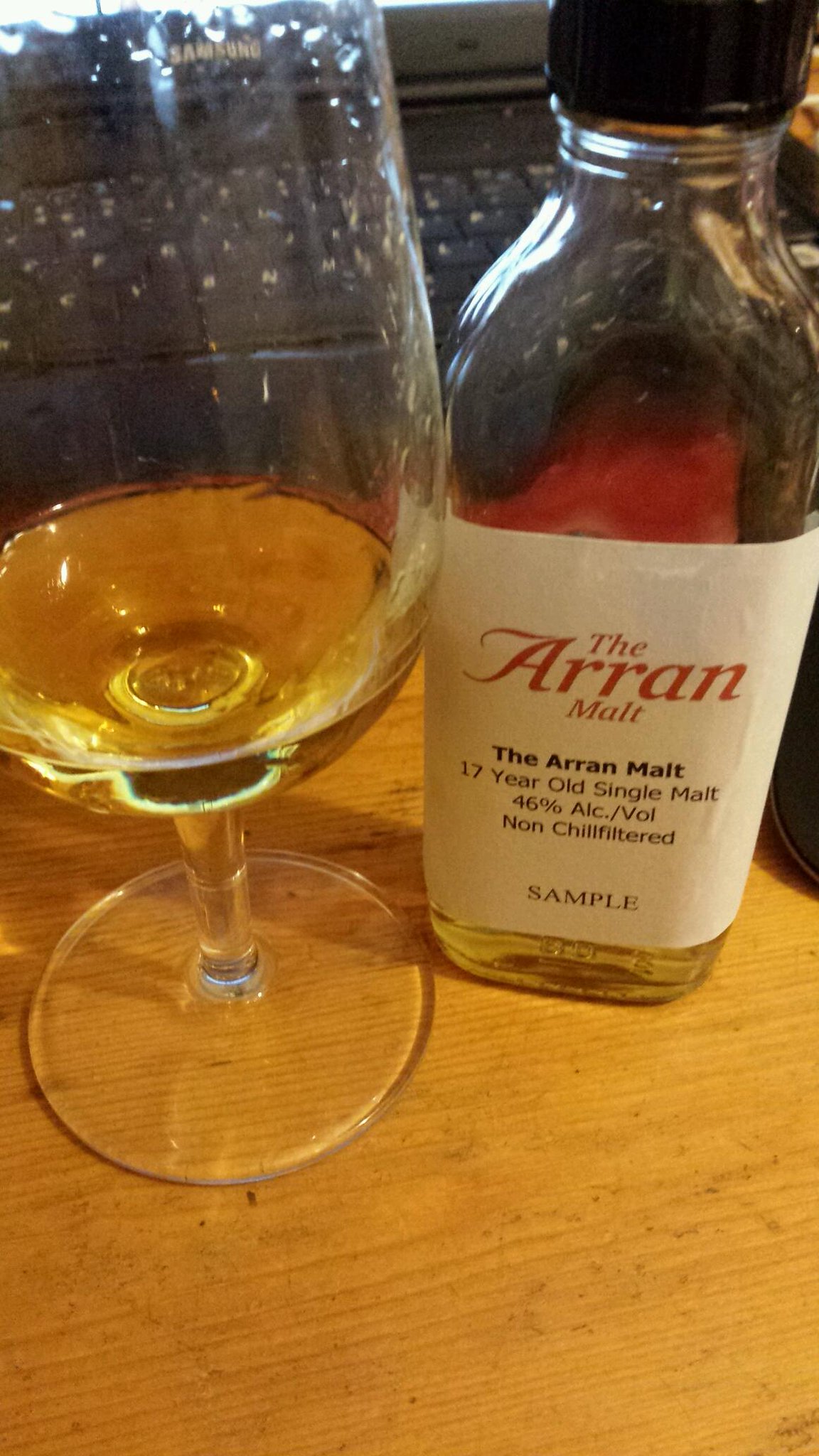
Tasting the new Arran 17 Year Old

I'm rather fond of Arran. The 10 Year Old is a good every day dram (and the bottle goes down mighty fast in my house). Some of the limited releases have been superb, such as the Peacock, and the Sleeping Warrior. I'm not so keen on the Machrie Moor  - it needs more peat - but overall I like their whiskies.

I recently tasted a single cask bottling of whisky distilled in 1996 which was outstanding, and left me thinking that Arran's plan to have an 18 Year Old as part of the core range was A Good Thing, because the mellow, rounded nature of that limited release 17 Year Old really suited the sweet toffee apple house style.

So, to this 17 Year Old, which is a limited release on the way to the Eighteen due out at some point in 2015.

The nose is sweet toffee, but with much less of the green apple note Arran usually gives me. There's a really attractive marzipan-nutty aroma. It seems a little more spirity than usual for Arran.

The palate is very rounded and mellow. Sweet syrupy apple juice, musty-dusty wood, and a little bit of the almond I found on the nose.

With water the nose opens up. Still nutty, but more macaroon or coconut, and biscuity. Not apple-y. The palate is now mouth coating and silky, very sweet and not so apple. The finish is really satisfying - lipsmacking even.

Overall, I'd rate it as Very Good Indeed.

2014-03-27

#LightOnDark

Ah, product launches, how we love you. The elaborate set dressing, the canapés, the free booze, the goodie bag, the celebrity presenter, the hash tag...

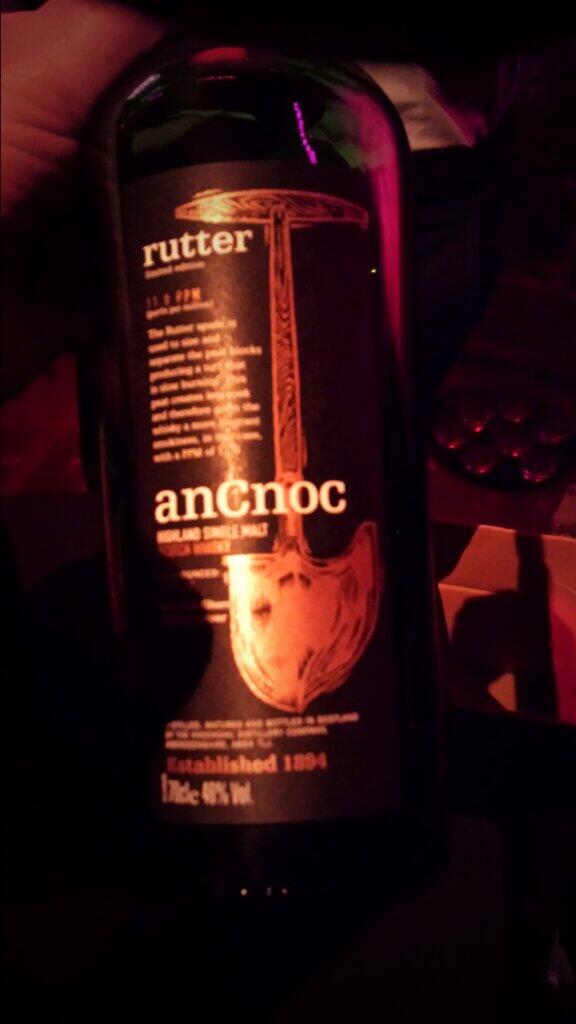
To the Arches for the release of AnCnoc's peated whiskies, Rutter, Flaughter, and Tushkar. Even before I entered the launch space I could smell the smoke. Dimly and dramatically lit, it was hardly the best environment to taste anything for the first time (especially from the big mouthed tumblers the whiskies were served in), so I bravely resolved to stuff my face with nibbles, drink whisky, and network.

AnCnoc is a sweet, light dram. It calls itself Highland, although if you ask me it's a fine example of the Speyside style. There are peated Speysiders to be found, but not many of them. AnCnoc have chosen to go for a light smoking, with the added twist that the peatiness is defined according to the level in the new make spirit, rather than, as everyone else does, by reference to the barley. Clever marketing, or merely thrawn?

I tried the Rutter with a tiny blue cheese topped biscuit served from a smoke filled glass dome. It was
delicious. I've no idea what fraction of the deliciousness was whisky-based, but delicious it was.

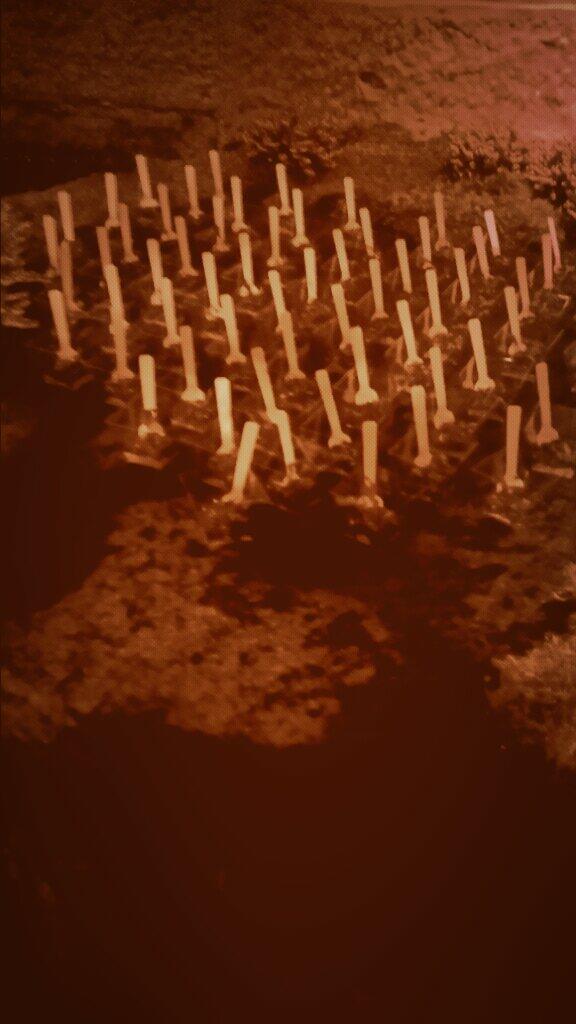
The Flaughter didn't seem to go so well with some chestnut cream filled macarons, but on the other hand the mini edible peat bogs complemented it superbly. I ate at least five.

The Tushkar? Well, it's a bit thicker or oilier than the other two, I think. And somewhat smoky.

I left, clutching my loot, having failed to network, and reflecting on the whiskies. I like the Rutter best, because it retains most AnCnoc character, combining sweet barley notes with light, dry smoke. The other two are good, but they could be from any number of distilleries.

My ratings:
  • Rutter - Very Good
  • Flaughter - Good
  • Tushkar - Good
  • #LightOnDark - Excellent
  • Edible Mini Peat Bogs - Can I Have A Full Size One Please?
    Mmmmm, edible peat bogs

2014-02-11

The Liberator: The Pie Chart

A delicious Sauv-Sem blend from South Africa. I'm posting it here, not as a recommendation, because it was a one-off limited release of less than 5000 bottles, but by way of saying that if you see something else by the Liberator, you should probably grab it.


It was a rich, nutty-into-grapefruity wine, with a wee bit of frangipane about it too. Excellent.

Details here, and background on The Liberator here.

2014-01-03

Rosy Wine

Rather than writing about the more famous wines in the picture above, this evening's post is about the Grüss Gewürztraminer 2012.

Grüss is a family-run domaine founded in 1962 at Eguisheim which these days extends to 15ha spread over 42 parcels. The vineyards are managed using the lutte raisonné approach. They don't have a website; my information comes from this page on alsace-vintage.com.

This is a very fresh, youthful Gewürz, with plenty of floral notes, citrus, and not much spiciness. There is also some aroma which reminds me of chalk. The common comparison of Gewürztraminer to roses seems very apt here, since the lemony-chalk smell is something I often find in roses.

The palate is off-dry (or perhaps medium-dry), mid bodied and not very acidic. Also quite fat, although not quite oily in texture. There's a lovely richness and a hard to pin down woody spiciness, perhaps cloves, reminiscent too of edinburgh rock.

This is a very straightforward, decent wine. Less prestigious than its fellows in the line-up above, but a good typical example of Alsace Gewürz.